


You need solar panels with enough power and the right connectors paired to create the complete system. There are definitely ways to charge your solar-powered gadgets and electronics without the use of direct sunlight. Some are more effective than others and some are faster than others. However, we’ll take a look at the two basic areas where we can charge solar-powered objects and review the best ways to charge solar-powered parts without sun, both indoors and outdoors.
Solar energy systems include photovoltaic cells that form the solar panel. The panel collects energy from the sun (therefore, “solar energy”) and converts it into usable energy for rechargeable batteries or lights to turn on and work for a few hours or several hours.
Of course, solar energy is much more complicated than this simplified view, but the basics are what most of us need to understand about solar energy and how it affects our use of it. You can basically run everything with solar energy. Lights, disco lights, solar lanterns, refrigerators, laptops, air conditioners, literally anything. However, the key is that you have the right solar energy system.
There are several ways in which solar lights can be charged indoors. It is possible to charge solar batteries with normal batteries, i.e. I’ve done it many times when I realized they needed my solar lantern the next day, and it was, well, midnight. I wouldn’t have much sun available before four in the morning.

Many of the best solar-powered products in the past have charging options by connecting them directly to a power outlet, an in-car DC charger, or other “standard” charging media. Mostly because there are times when you simply need to start with a full charge right away. This is usually for when you are in unusual circumstances or emergencies; think hiking, camping, backpacking, long trips through remote areas, and other outdoor activities where you won’t be close to standard electricity and communication options. Many of these products have USB charging options or use standard socket-type plugs to charge them ahead of time.
I prefer the ones with USB charging options, as they offer the most versatility for any situation. And yes, you can charge solar panels through windows. I have used many small solar-powered electronics and appliances over the years and have often charged them through my. Place the solar cell part of the object directly on the window sill for faster and more effective charging.
Indoors

Place the solar panels directly under an indoor lighting to charge them as quickly as possible without sunlight. Place the solar lights as close to the bulb as possible. The farther away you are from an incandescent bulb, the longer it will take for the solar panel to charge. It helps us reduce our footprint on the planet, saves us money, and overall, it’s a fantastic thing overall.
Solar cells respond to incandescent light the same way they do with solar energy, because solar and incandescent bulbs emit light waves that solar cells can collect and convert into energy. Incandescent lights must be bright enough, but if they are, the wavelengths of light are similar enough to the ultraviolet waves of the sun that solar cells use convert solar energy into usable energy.
How can I charge my solar lights without sunlight?

Here are some of the easiest ways to charge your solar lights effectively and conveniently without sun. You should place the solar lights so that they face directly at the sun, this is mostly done in winters because there is less sunlight available throughout the day. Since solar lights are powered by solar energy, you might think that they are only practical for sun-drenched areas like in Mexico. When charging a solar panel, you’ll want to choose an artificial light source that has the highest number of lumens, since it will be the most intense.
So the big question is, yes can you charge a solar panel with a bulb or in some other artificial lighting that doesn’t rely entirely on direct sunlight? The short answer is yes, artificial light can power a solar light. Depending on the power, the number of bulbs and the distance that the solar panel is from the light source, it will determine the intensity of the charge that the solar light receives and the power that the solar panel can produce to power other objects. Yes, you can charge solar panels with LED lights. However, light waves are not as similar to sunlight waves as incandescent bulbs produce.
Place solar lights near artificial lighting or incandescent bulb to charge solar lights without the presence of sunlight. Therefore, if the solar lights are far away from the bulbs, it would take longer to charge the solar panel. I agree that it is profitable, as you have pointed out, which I think is great, since I don’t have time to spend too much money on garden lamps anyway. In that case, we recommend using the LED head separately with the solar energy system, the LED light distance between the maximum of the solar energy system can be 5 meters.What kind of light bulbs can i use to charge my solar lighting?

You can use any type of bulb that creates light within the correct light wave spectrum. LED lights, for example, create light with visible light, long infrared waves and ultraviolet waves, which the sun creates. However, most light sources, including LEDs and incandescents, halogen, and most household lights, do not create many ultraviolet light waves. This applies the same concept to incandescent light.
Incandescent bulbs are not as efficient at charging solar cells, mainly because they require energy to generate energy when solar charging only requires renewable energy from the sun. To charge the battery or other solar-powered objects with an incandescent bulb, you should place the object about 20 inches away from the light source for as many hours as possible. Incandescent bulbs are not as powerful as direct sunlight, so they will probably take longer to charge than outdoors. My solar powered flashlight took about 6 hours to fully charge with incandescent light when it normally takes 4 hours under direct sunlight.
Since you want to use another source of electrical energy to produce sunlight, LED light is a good choice. Like the Sun, LED is designed to produce a dispersion of light wavelengths, consisting of visible light, long infrared waves and ultraviolet waves. However, each light source has a distinctive spectrum. While solar power produces abundant amounts of ultraviolet, an incandescent light emits only a little of it.
This means that it will take longer to charge and you will need more LED lights to charge the solar panel than with incandescent bulbs. Shoot for a power close to 100 than 40 for solar panel LED light charging. If you read in depth in the previous sections, you’ll see the various ways you can charge your solar-powered items indoors through artificial light, standard electricity sources, and windows. No, solar lights don’t need direct sunlight to charge.
Outdoors
Photons in natural light are what is converted, not heat, which is usually what we associate with sunlight versus daylight. This means that while direct sunlight will produce a stronger charge than indirect sunlight for a solar-powered device, direct sunlight is not absolutely necessary for power to be generated. Solar panels are approximately 40% more effective on cloudy days than on sunny days.
Generally speaking, when you charge outdoor lights, this will be with the sun. However, there are circumstances when charging outside may need a little help with the right equipment. First of all, I want to reiterate that even on cloudy days, solar panels charge some charge. It will not be as strong as on sunny and sunny days, but there is still solar energy that the sun sends to earth.
Also, make sure that where you place the solar powered lights are not prevented from receiving solar power. Solar lights can be charged indoors, but are more applicable to smaller mobile solar lighting systems that are mainly used for driveways, patios and driveways. Keep in mind that solar lights are designed to optimize energy use during the day, so you don’t have to worry every time the sun doesn’t show up. Solar lights need about 6 hours of sunlight for a full charge and this will help them work at least about 8 hours on a good charge
That said, the best way to charge solar batteries or lights on cloudy days is with the use of an amorphous solar panel instead of the more popular polycrystalline or monocrystalline panels. Amorphous panels are not as efficient as polycrystalline and monocrystalline panels, but they accumulate more light energy from cloudy skies due to their nature. It’s important to remember that solar lights will continue to charge in winter, although it won’t be as fast or as efficient as during the summer months, when the sun’s heat sends out all those intense light waves for longer hours. Ultraviolet light from the sun will penetrate the clouds and continue to hit the patio’s solar panels almost any day, even in the winter and cloud-covered months.
Can i charge my solar lighting in the winter?
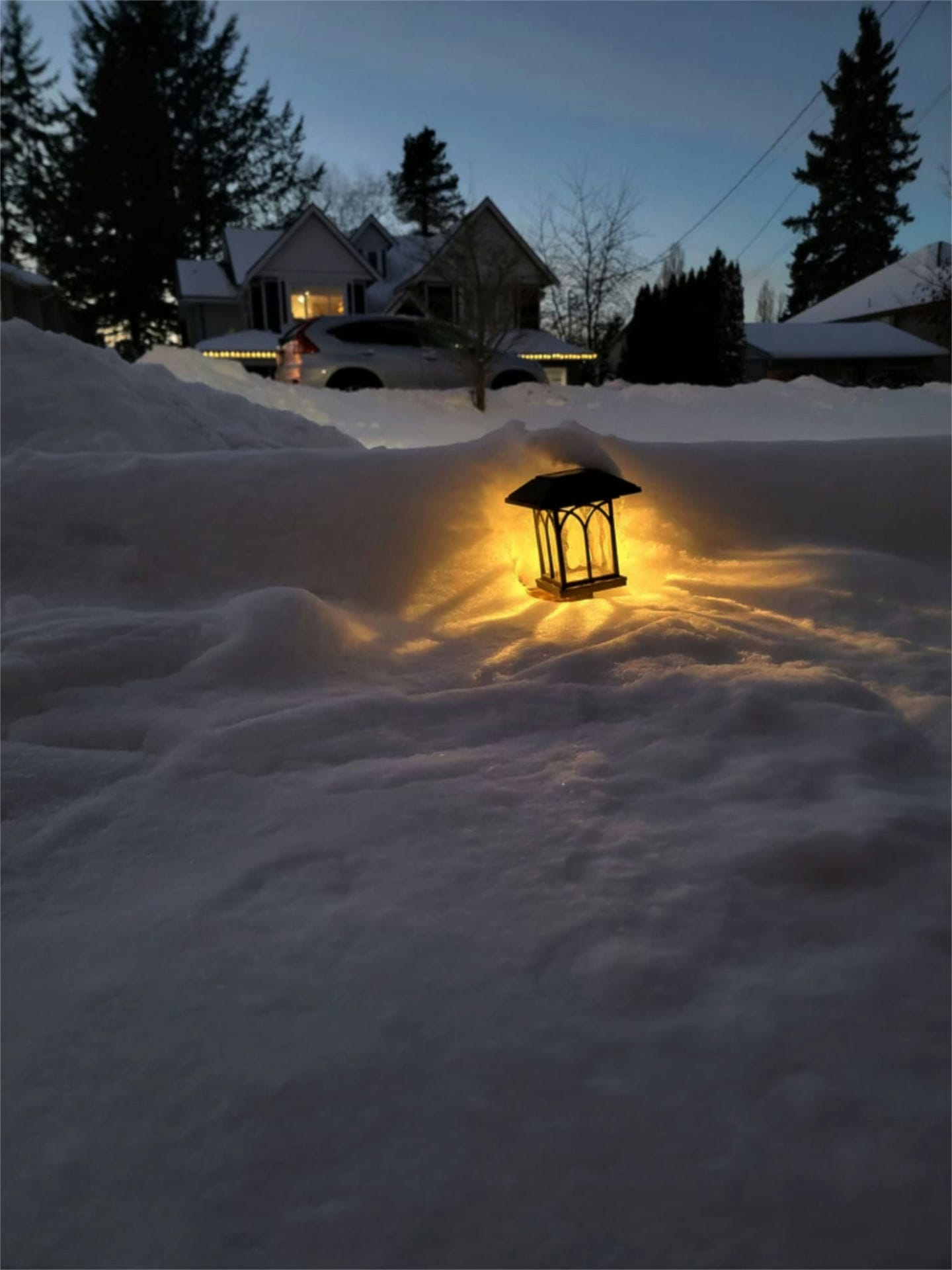
The efficiency of a solar charge to the battery depends largely on the amount of direct light it receives and does not have to be direct sunlight. In cloudy weather, sunlight can still reach the solar lights, but not much than when it is sunny. If you use an indoor electric light to charge the panels, do not place sunlight too close to the bulb, as it will get too hot or present a fire hazard. On a whim, I put my flashlight, with the photovoltaic cells facing the light, under a lamp, left the light on for a while and worked on my other preparations.
If it snows in your region during the winter months, you’ll need to do a few things to keep the light on the panels. First of all, you will have to regularly clean the snow from solar panels and light faces. This simply requires gentle snow removal with a brush that has soft bristles or a soft cloth that won’t damage the solar cells. Secondly, during the winter months, you may want to relocate your solar panels to avoid shadows.
Winter days have shorter daylight hours, meaning longer and more frequent shadows. Place the solar panels to the south to collect the most light. If you have panels that rotate or tilt, you can reposition them during the day (usually at noon, as the sun shifts down) to ensure that the panel receives as much sunlight as possible. You’ll be happy to know that several solar-powered objects have alternative energy sources, including standard electricity over the grid.